
Custom SaaS Development
YOUR ADVANTAGE.
BuilT INTO Saas.
Neologic Custom Software is a Chicago-based boutique development company for complex B2B, vertical, and AI-enabled SaaS. I’m Dmitriy Fridlyand. I lead product discovery and architecture personally, backed by a global team of 30+ senior engineers. Together, we turn domain expertise, validated MVPs, and established products into production SaaS with a build budget guaranteed once the scope is approved.

★★★★★
44 reviews
Your saas stage
Who Is Custom SaaS Development For?
Custom SaaS development makes sense when you bring something hard to copy: domain knowledge, proprietary workflows or data, a validated product, or an AI capability that does real work.
01. idea / Domain advantage
You Know the Problem
But Need the Product Architecture
You know the industry, workflow, or AI opportunity. I help turn that advantage into a focused product, identify the essential first release, and remove features that do not strengthen the business case.
02. validated mvp
Your MVP Works
But Now it Needs to Scale
You proved that people want the product. Now we assess the codebase, data model, security, and infrastructure to determine what can support the next stage and what will become a liability.
03. existing saas
Your SaaS Hit A Limit
Now the Architecture Has to Catch Up
You already have users, data, and a working product. I help modernize the architecture, remove back-end bottlenecks, and integrate AI where it can automate real work.
Not every SaaS idea is worth building.
I’ll help you identify what is worth building before serious engineering spend begins.
services
What Custom SaaS Development Services Do We Provide?
Neologic supports the full SaaS product lifecycle: from defining the first release to modernizing and scaling an established platform.
SaaS Product Strategy
I help you define the product around the user problem, business model, competitive advantage, and technical constraints. The result is a prioritized product direction that engineering can execute.
AI SaaS Development
I identify where AI can create real product value. We build AI-first SaaS, agents, RAG, proprietary-data search, predictive features, and AI-assisted workflows into the architecture instead of bolting them on later.
SaaS MVP Development
We define and build the smallest release that can test the product with real users. The goal is a focused MVP that proves the business case without creating disposable software that has to be rebuilt once it succeeds.
MVP-to-Production Engineering
A working MVP can prove demand without being ready for production. I assess what can stay and what will become a liability; my team refactors or rebuilds weak areas into secure, maintainable SaaS that can support real customers.
Multi-Tenant SaaS Architecture
When multiple customer organizations share one product, we build the systems that keep them separate: tenant isolation, provisioning, roles and permissions, subscriptions, billing, usage metering, account management, and administration.
SaaS Backend Scaling
I identify the bottlenecks before adding infrastructure. We scale databases, APIs, queues, caching, background processing, cloud infrastructure, monitoring, data pipelines, and AI workloads around the traffic and reliability the product actually needs.
SaaS API Development
We build secure APIs and integrations with payments, CRM, ERP, identity providers, communications, analytics, partner systems, and AI services, connecting the product to the tools it depends on without creating a fragile chain of dependencies.
SaaS Security & Compliance
I surface security and compliance risks early. We build authentication, RBAC, tenant isolation, audit trails, data controls, and architecture for HIPAA-sensitive products and SOC 2 readiness, including strict control over what AI systems can access.
SaaS Modernization
I help identify what is actually limiting an established SaaS product. We modernize architecture, infrastructure, data, security, and performance, also adding AI or agents where necessary.
AI saaS
What Does AI SaaS Development Include?
Practical AI starts with the work the product needs to do, then uses AI only where it improves the workflow, economics, or customer experience.
AI improves specific workflows such as search, summarization, extraction, classification, drafting, recommendations, decision support, and automation.
AI-First and AI-Native SaaS
AI is central to the product itself, so the workflows, data layer, UX, and architecture are designed around it from the start.
Agentic SaaS and Workflow Automation
AI agents use approved context and tools to complete multi-step work, update connected systems, and route exceptions to people when human judgment or authorization is required.
AI Search, RAG, and Proprietary Data
We build AI systems that work with customer documents and operational data while keeping tenant data isolated and access tightly controlled.
Production-Ready AI SaaS Architecture
Production AI requires more than a model connection. We design model routing, evaluation, monitoring, human approval, usage and cost controls, fallbacks, and failure recovery around the product’s reliability requirements.
SAAS TYPES
What Types of SaaS Products Do We Build?
The strongest SaaS products solve work that is difficult to commoditize: industry-specific workflows, complex operations, proprietary data, regulated processes, or work AI can now perform itself.
Vertical SaaS & Vertical AI
Products built around the workflows, data, rules, and terminology of a specific industry, from healthcare and compliance to legal, education, logistics, and other specialized markets.
AI-Native & Agentic SaaS
Products in which AI is central to the customer value proposition, whether it analyzes proprietary information, coordinates tools, makes recommendations, or completes defined work.
B2B Workflow SaaS
Platforms that run core business processes such as onboarding, scheduling, compliance, billing, approvals, case management, and field operations.
SaaS for Regulated Industries
Software designed for sensitive environments where permissions, audit trails, data controls, security, and compliance must be built into the architecture.
Multi-Sided Platforms & Marketplaces
Platforms that coordinate multiple groups with different roles, permissions, workflows, data, transactions, and incentives inside one product.
Service-as-Software
AI-powered products that perform the work itself: reviewing documents, reconciling transactions, qualifying leads, or processing claims and deliver the result instead of just the tool.
THE PROCESS
What Is My SaaS Development Process?
The process resolves product and technical unknowns in stages, so each major commitment is based on evidence from the step before it.
01. PRODUCT FIT CALL
02. PRODUCT DISCOVERY
03. PROTOTYPE
04. EXECUTION
05. HANDOFF & SUPPORT
01
PRoduct fit call
30 -60 MINS
NO IS A VALID ANSWER
I start with where the product is today: an idea, prototype, live SaaS platform, or a build that has gone off track. I look at the users, business model, product goals, current technology, AI needs, budget, and biggest unknowns.
deliverable
A clear technical diagnosis and immediate next steps.
02
PRODUCT DISCOVERY
1-2 WEEKS
CHICAGO ONSITE
This is where assumptions become a buildable product. I work directly with founders and stakeholders to map users, workflows, priorities, business rules, integrations, data, AI, security, and scale; for Chicago teams, that can include onsite whiteboarding. If you already have an MVP or live product, I also review the codebase, architecture, technical debt, and what is worth keeping.
deliverable
Product Requirements + Architecture Blueprint.
03
Prototype & Guarantee
1-2 WEEKS
SCOPE LOCKED
BUDGET GUARANTEED
For a new SaaS product, I turn the requirements into clickable workflows you can test before production code exists. For an existing product, I prototype only what is changing and validate it against the current architecture. Once the scope and architecture are approved, I lock the build budget in writing.
deliverable
An interactive prototype, a phased execution plan, and your Guaranteed Budget.
04
Engineering & Execution
3-6 MONTHS
1 POINT OF CONTACT
0 SILENT UPCHARGES
My team executes the approved architecture while I remain your single point of accountability.
We reuse proven components, APIs, and AI-assisted development where they save time. Your budget goes toward the parts of the product that actually need custom engineering.
deliverable
A stable, production-ready system built exactly to spec.
05
Clean Handoff & Local Support
100% IP OWNERSHIP
NO VENDOR LOCK-IN
CHICAGO SLA
My team deploys the product. I make sure you leave with the source code, documentation, infrastructure access, and 100% ownership of the IP.
If the product needs another phase, we plan it around real users and real usage, not assumptions made before launch.
deliverable
Full IP ownership and a localized Chicago SLA for predictable, direct support.
saaS case studies
Can We Build SaaS at Scale?
Edtech SaaS
HEALTHCARE SAAS
B2B Workflow Platform
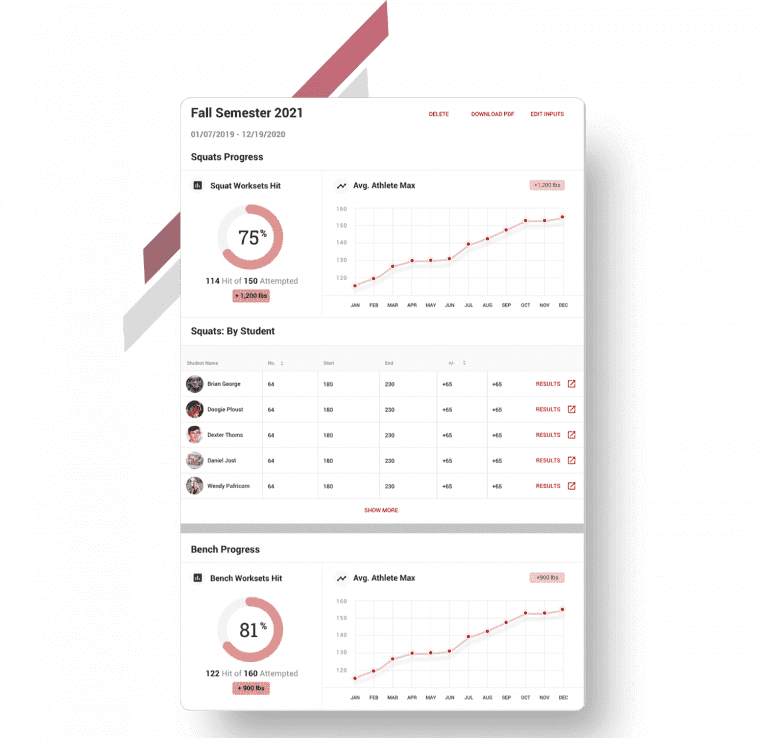
Educational SaaS Scaled to 75,000+ Athletes
PLT4M had a proven fitness methodology, but the product lived in thousands of Excel sheets. I architected a cloud-native, multi-tenant SaaS platform; my team built it for nationwide delivery, real-time athlete data, and peak school-season load.
700+
Scaled to 700+ schools and 75,000+ athletes globally.
6,500+
Empowered 6,500+ coaches to ditch manual tracking entirely.
0
Achieved zero downtime under massive load during peak school seasons.
fitness & Educaiton
Saas
Multi-Tenant Architecture
Cloud Platform
Mobile App
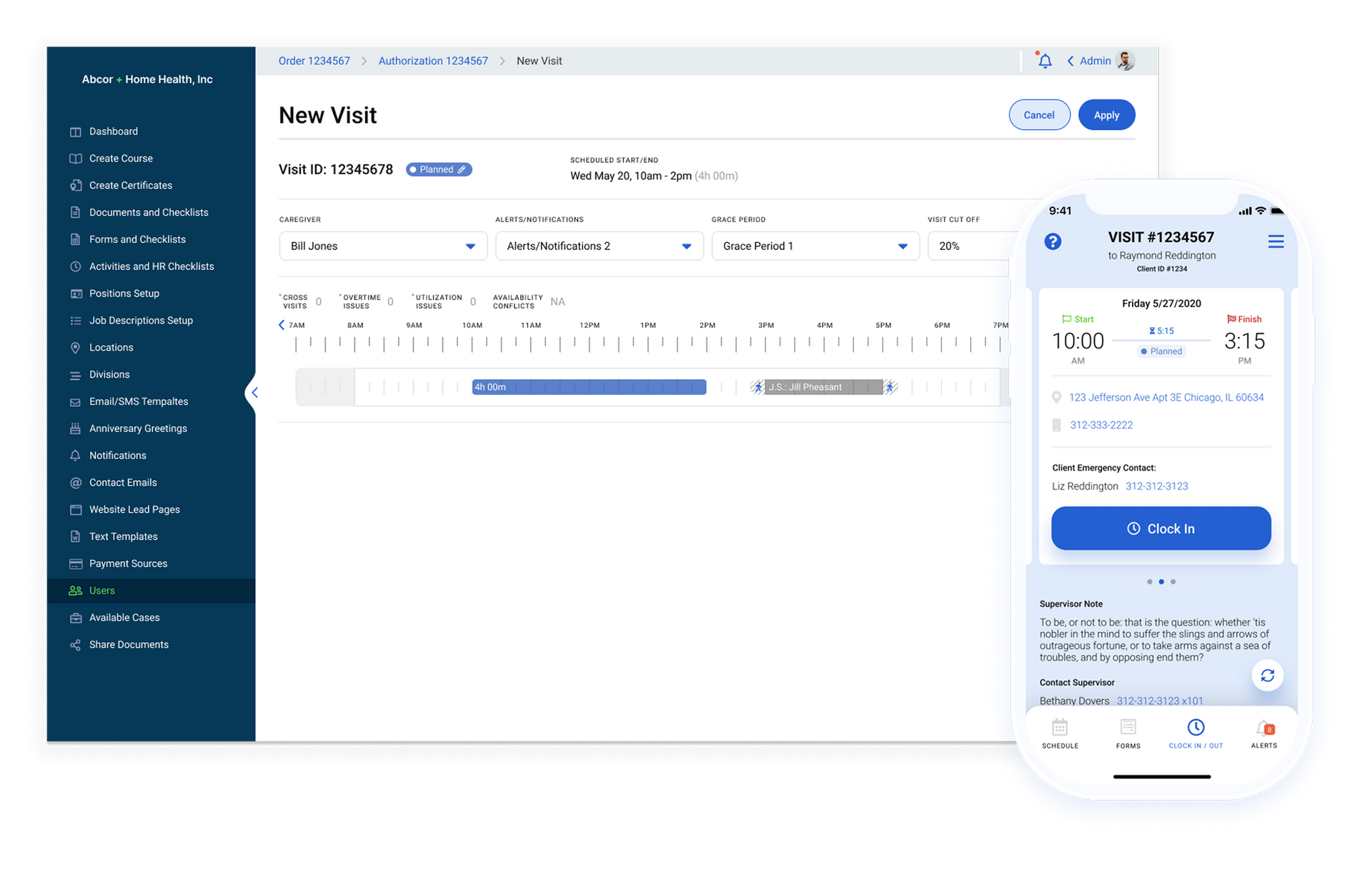
From Internal Home Care Software to a SaaS Product
Abcor originally needed software built around its own home care operation: client records, caregiver scheduling, field visits, compliance, billing, and payroll. I mapped the operating model and architecture; my team built the platform that later evolved into a SaaS product for the home care industry.
$3.5M
Managed $3.5M in compliance risk automatically.
16,800+
Tracked 16,800+ education hours with zero human intervention.
0
Eliminated paper entirely, unlocking rapid expansion without ballooning HR overhead.
Healthcare
SAAS
cRM
Learning Management System
Applicant Tracking System
HIPAA
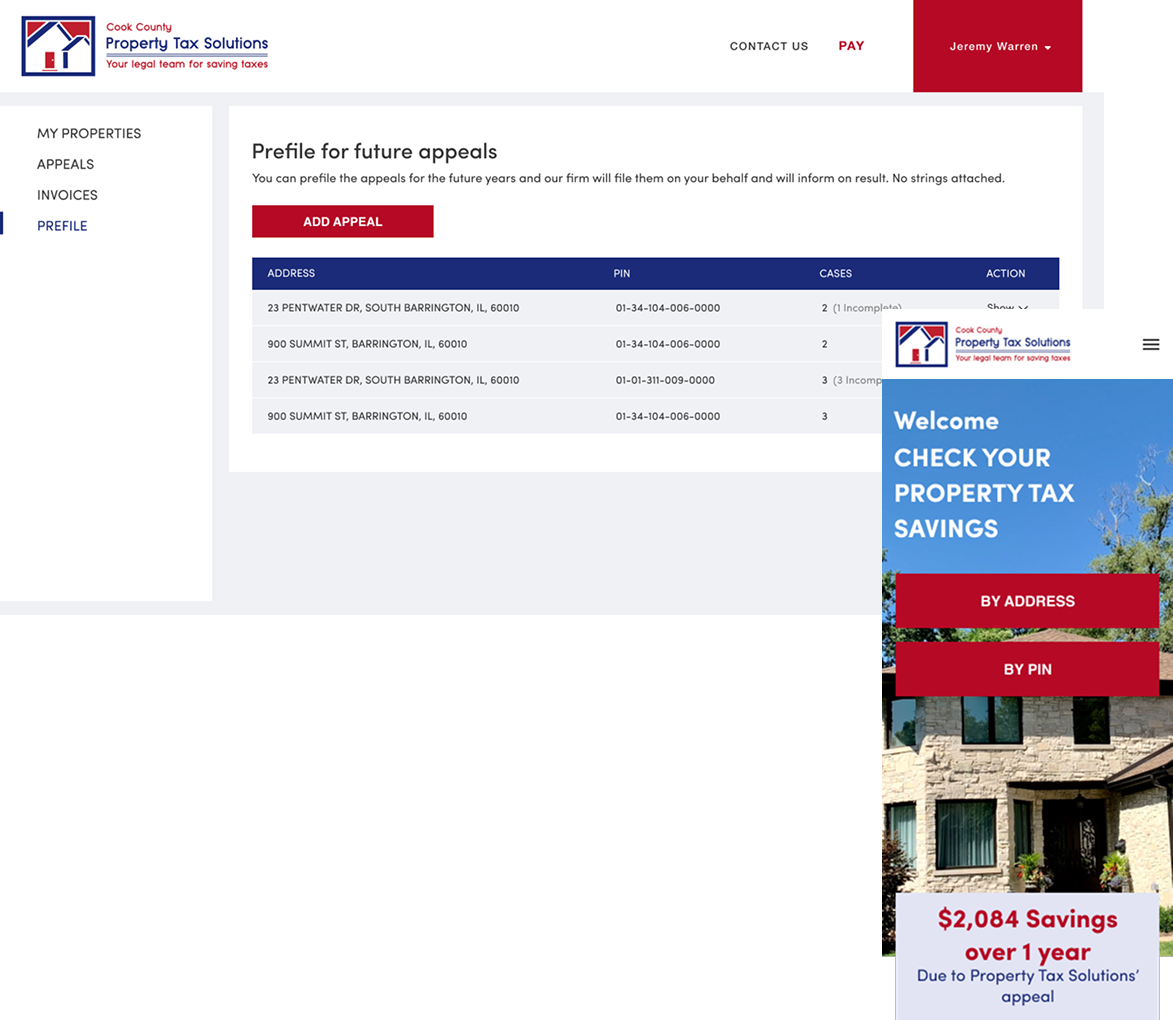
Custom Platform Tripled Capacity Without Adding Headcount
Property Tax Solutions was losing time to manual direct mail, intake, case screening, and filing. I mapped the workflow and architecture; my team built one platform connecting lead generation, digital onboarding, proprietary case screening, and case operations.
3x
Filed 3x more appeals than their closest competitor.
4.5
Eliminated 4.5 full-time employees' worth of manual data entry annually.
5 MIN
Reduced client filing time from hours to under 5 minutes.
LEGAL
b2b platform
workflow automation
direct mail integration
case management
chicago
modern, enterprise grade
WHAT IS OUR SAAS TECHNOLOGY STACK?
We select production-proven technologies around the product’s security, scalability, integration, data, and AI requirements.
Front-End
saas dashboards
customer portals
Backend
MULTI-TENANT Architecture
Secure APIs
Enterprise Scalability
Databases
tenant data isolation
search & flexibility
Cloud & Infrastructure
cloud-native development
ci/cd Automation
MONITORING & SECURITY
AI
RAG & AGENTS
PRIVATE DATA CONTROL
PRODUCTION AI WORKFLOWS
AI-Assisted Coding
ACCELERATED DEVELOPMENT
LOWER DEV OVERHEAD
SENIOR ENGINEER REVIEW
Local vs remote vs hybrid
Should You Hire a Local, Remote, or Hybrid SaaS Development Company?
The real decision is not just local vs remote. It is where product understanding, technical accountability, and execution capacity come from.
local Model
- Easier face-to-face collaboration
- Strong for early discovery and workshops
- Usually limited by a smaller talent pool
remote Model
- Broader access to specialists
- Often more flexible and cost-efficient
- Can feel distant if discovery and accountability are weak
neologic hybrid Model
- Chicago-led discovery, architecture, and client collaboration
- A global team of 30+ senior engineers providing specialist expertise and delivery capacity
- One accountable technical leader from product definition through launch
THE NEOLOGIC ADVANTAGE
Local product leadership. Global engineering capacity.
Estimated Pricing
How Much Does Custom SaaS Development Cost?
Custom SaaS development with Neologic starts around $40K for a focused MVP. More complex B2B and regulated platforms generally start around $75K and $125K respectively.
SaaS MVP
From $40k
A focused first release built to validate the product with real users.
1 CORE WORKFLOW
1–2 USER ROLES
1-2 INTEGRATIONS
basic admin
BASIC MULTI-TENANCY
Best fit:
A validated idea ready for its first real users.
B2B SaaS Platform
From $75k
A production SaaS platform built around complex workflows, multiple users, integrations, and automation.
COMPLEX ROLES
MULTI-TENANCY
BILLING & USAGE
BUSINESS SYSTEM INTEGRATIONS
Best fit:
SaaS that runs a meaningful part of a customer’s operation.
Regulated Healthcare SaaS
From $125k
A secure SaaS platform where sensitive data, auditability, and compliance shape the architecture from day one.
HIPAA-SENSITIVE DATA
AUDIT TRAILS
GRANULAR ACCESS
HEALTHCARE INTEGRATIONS
Best fit:
Healthcare SaaS where failure creates operational or compliance risk.
Engagement model
HOW DOES THE SAAS BUDGET GUARANTEE WORK?
Once the scope is approved, I take the estimation risk, not you.
GUARANTEED BUILD PRICE
Once the scope and acceptance criteria are approved, I guarantee the build price in writing. If my team underestimates the work required to deliver it, you do not pay more.
- Approved features and workflows
- Agreed architecture and integrations
- Engineering required to meet the acceptance criteria
- Our estimation overruns
PRICED SEPARATELY
The guarantee applies to the agreed build, not to work added later or costs charged by outside vendors. If you want to expand the scope, I price it before my team proceeds.
- Added or materially revised scope
- Cloud and hosting
- AI/model usage
- Third-party licenses and transaction fees
Added scope can change the price. My estimation mistakes do not.
domain knowledge
Which Industries Do We Know Best?
You do not need developers who know every industry. You need a team that understands the rules, workflows, and risks your SaaS product cannot afford to get wrong.
Healthcare
We build healthcare software around HIPAA-sensitive data, caregiver operations, field workflows, compliance, billing, and complex permissions.
Legal Services
We build legal software for specialized workflows including intake, case management, document automation, and proprietary business logic.
Education & Fitness
We build education and fitness platforms that connect administrators, instructors, and end users through scalable content, progress tracking, reporting, and multi-user workflows.
Real Estate & PropTech
We build real estate SaaS around property data, document-heavy workflows, multiple user roles, payments, and market-specific business rules.
Logistics & Transportation
We build software for dispatch, tracking, mobile field workflows, API integrations, scheduling, and real-time operational visibility.
Cybersecurity
We build cybersecurity software that turns technical activity into verifiable reporting, compliance evidence, audit trails, and client-facing proof of work.
Why hire us
Why Hire Neologic Custom Software for SaaS Development?
One Accountable Architect
I stay involved from product discovery through launch. No account manager sits between you and the person responsible for the architecture.
Deep Product Discovery
I work through the users, workflows, business rules, data, integrations, and technical risks before my team commits serious engineering time.
Guaranteed Build Budget
Once the product, architecture, and scope are clear, I guarantee the build price in writing. If I underestimate the work inside the approved scope, you do not pay for my mistake.
Hybrid Delivery
Product leadership and accountability stay with me in Chicago. My global team of 30+ senior engineers gives the build the specialist capacity it needs.
Practical AI
We use AI where it improves the product or removes meaningful work, whether that means one focused workflow, proprietary-data RAG, agents, or an AI-first product.
100% Ownership
You own the code, IP, and infrastructure. No vendor lock-in.
faq
Frequently Asked Questions
How much does custom SaaS development cost?
Neologic custom SaaS development starts around $40K for a focused MVP. More complex B2B platforms commonly start around $75K, while regulated healthcare SaaS typically starts around $125K. Final pricing depends on the product’s workflows, roles, integrations, multi-tenancy, AI, security, and compliance requirements.
How long does it take to build a SaaS product?
It depends on how much of the product is already understood. A focused MVP may take a few weeks. A larger B2B or regulated SaaS platform can take significantly longer. I use product discovery and prototyping to establish a realistic schedule before the production build begins.
Do you work with non-technical SaaS founders?
Yes. You can arrive with domain expertise, a business model, and a clear user problem rather than technical specifications. I turn that knowledge into a product plan and challenge assumptions that add cost without strengthening the product.
What is the difference between an MVP and production-ready SaaS?
An MVP proves whether the product is worth pursuing. Production SaaS has to survive real users, real data, security requirements, integrations, failures, and growth. The goal is to build the smallest useful first release without creating software that has to be thrown away once it succeeds.
Can you turn an AI-generated, low-code, or early MVP into production software?
Yes, when the underlying product is worth keeping. I first assess whether the current code and architecture can support the intended product. We preserve what is sound and refactor or rebuild only the areas that create unacceptable production risk.
Can you add AI to an existing SaaS product?
Yes. We add AI when it can measurably improve a workflow or product capability, for example search, extraction, recommendations, automation, RAG, agents, or predictive workflows. The use case comes first; the model and architecture follow.
How do you handle multi-tenant SaaS architecture?
We design the platform so multiple customers can use the same product while keeping their data, permissions, workflows, and AI context properly isolated. Depending on the product, that can include tenant-aware databases, RBAC, billing, usage metering, audit trails, integrations, and separate AI retrieval contexts.
How does the SaaS budget guarantee work?
Once the product requirements, architecture, acceptance criteria, and approved scope are clear, I guarantee the engineering price in writing. If we underestimate the work required to deliver that scope, you do not pay for our estimation error. New or materially changed requirements are priced separately before implementation.
Should I hire a local or remote SaaS development company?
Neologic uses a hybrid model: I lead discovery, architecture, and major technical decisions from Chicago, while our global team of 30+ senior engineers provides specialist expertise and delivery capacity.
What happens after the SaaS product launches?
After launch, we can monitor production, resolve issues, improve performance, and plan future releases around actual user behavior and business priorities. You can continue with Neologic or transition the product elsewhere because you own the code and infrastructure.
Do I own the SaaS source code and IP?
Yes. You own the source code, product IP, data, and infrastructure associated with your build. No vendor lock-in.
get started
BUILD THE RIGHT SAAS. NOT JUST MORE SOFTWARE.
Tell me what you are building, where it stands today, and what is creating uncertainty. I’ll help you determine the most sensible next step.
We will get back to you as soon as possible.
Please try again later.
