
SOFTWARE PRODUCT DISCOVERY SERVICES
Know What to Build Before You Commit to Development.
Software product discovery turns new ideas and proposed changes to existing products into a practical development plan. I'm Dmitriy Fridlyand. I work directly with you to challenge assumptions, prioritize requirements, assess feasibility, and define the right technical approach. Once the scope is validated and approved, I guarantee the agreed price for fixed-scope development.

DEFINE WHAT MATTERS
Prioritize the features your product actually needs.
REUSE WHAT WORKS
Preserve valuable code, systems, and integrations.
CATCH RISKS EARLY
Resolve technical unknowns before development.
PLAN WITH CONFIDENCE
Move toward an approved scope and a reliable build price.
WHO BENEFITS MOST
When Do You Need Software Product Discovery?
Discovery helps you plan a new product, expand an existing platform, or build internal software. You may already have requirements, designs, or working code; the goal is to resolve what's missing before a major development investment.
01.You Have a Software Product Idea
You're planning a SaaS platform, marketplace, or web or mobile app. You understand the opportunity but need to define the MVP, prioritize features, map user journeys, and choose a feasible technical approach.
02.You Want to Expand or Change an Existing Product
Your product is live, but you need new features, AI capabilities, integrations, or a different direction. I review the existing architecture and dependencies to determine what can be reused and how the changes should be built.
03.You Have Requirements or a Prototype, but No Build-Ready Plan
You have a feature list, Figma designs, an AI-generated MVP, or a demo. Discovery identifies gaps in business logic, integrations, data, security, and architecture so the concept can become dependable software.
04.Your Business Needs a Custom Internal Solution
You need a CRM, customer portal, operations platform, or workflow automation solution. I examine how employees work, including exceptions and existing systems, to recommend what to build, integrate, automate, or improve.
SOFTWARE PRODUCT DISCOVERY SERVICES
What Does Software Product Discovery Cover?
Discovery investigates the product, business rules, and technical decisions that affect feasibility, delivery, and cost. The work is tailored to new products, existing platforms, and internal applications.
Product Requirements & MVP Planning
Define users, core features, business rules, user journeys, and first-release priorities.
Feature priorities
User stories
MVP scope
Technical Feasibility & Architecture
Evaluate architecture options, data requirements, APIs, integrations, security constraints, and technical risks.
Architecture
APIs
Feasibility
Existing Product & System Assessment
Review current functionality, dependencies, and systems to identify reusable components and potential integration issues.
Existing architecture
Reuse
Dependencies
Development Scope & Roadmap Planning
Define implementation phases, priorities, scope boundaries, and the information required for a dependable development estimate.
Scope
Roadmap
Budget planning
WHY HIRE NEOLOGIC
Why Choose Neologic for Software Product Discovery?
I've been helping companies define and build software since 2008, from Fortune 100 engagements at Deloitte to working with hundreds of small and midsize businesses. I lead discovery personally, challenge assumptions, and remain accountable for the technical direction from the first conversation through the approved build.
01. I Investigate the Business, Not Just the Feature List
I work directly with founders, decision-makers, and users where available. I investigate product goals, workflows, business rules, existing systems, and constraints before recommending development. For Chicago-area clients, I can also conduct on-site sessions when useful.
02. I Question What Really Needs to Be Built
I compare building, buying, integrating, reusing, or simplifying. If you can preserve an existing backend, reduce MVP scope, or avoid a costly feature, I'll explain the trade-offs.
03. I Bring Technical Judgment to Early Decisions
I look at data, architecture, integrations, feasibility, and risks while there's still room to change direction—not after the wrong assumptions have become code.
04. I Stay Accountable Beyond Discovery
I turn the findings into requirements and a technical direction, validate what needs testing, and stay responsible for the architecture while Neologic's global team of 30+ senior engineers builds the approved solution.
DISCOVERY DELIVERABLES
What Do You Get From a Software Discovery Engagement?
You receive documented recommendations to guide your development decision, not just meeting notes. The exact deliverables are agreed in advance and may include:
PRODUCT & BUSINESS REQUIREMENTS
A BRD or requirements document defining product goals, features, users, business rules, and priorities.
USER FLOWS & FUNCTIONAL SPECIFICATIONS
User journeys, workflows, user stories, and important edge cases.
TECHNICAL ARCHITECTURE PLAN
Recommended architecture, technology direction, data needs, APIs, and integrations.
FEASIBILITY & RISK ASSESSMENT
Technical constraints, unresolved dependencies, reusable components, and necessary validation.
DEVELOPMENT ROADMAP & ESTIMATE
Proposed implementation phases, MVP priorities, and an initial development estimate.
VALIDATED SOLUTION
→
APPROVED REQUIREMENTS
→
GUARANTEED BUILD PRICE
FROM DISCOVERY TO GUARANTEED BUDGET
Define the Scope. Validate the Solution. Lock the Build Price.
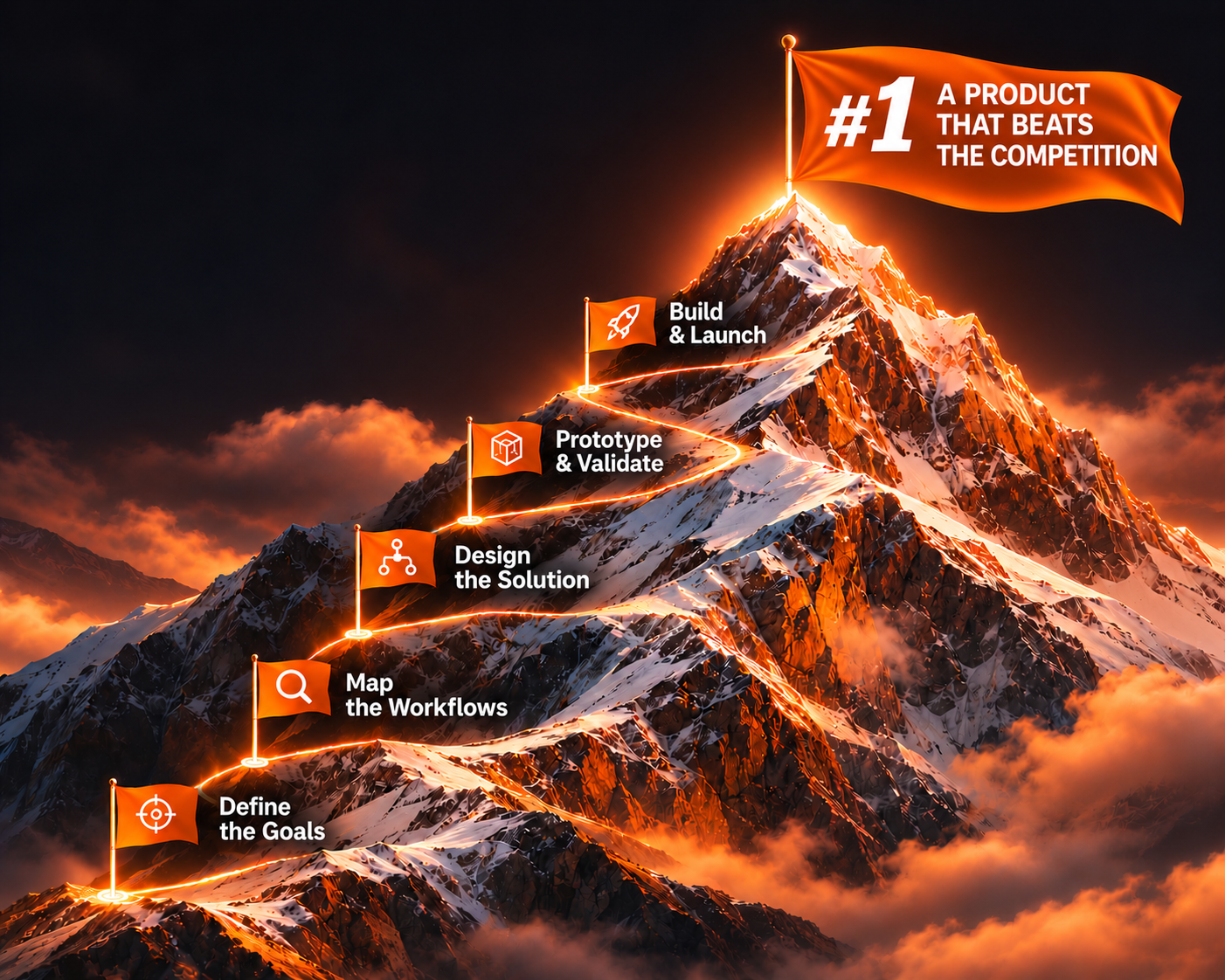
Discovery clarifies what to build and why. A clickable prototype or technical proof, when appropriate, helps validate the solution before we agree on requirements, acceptance criteria, exclusions, and a fixed-scope development price.
DISCOVERY
Define goals, functionality, architecture, and risks.
→
VALIDATION
Review a prototype, technical proof, or other suitable evidence.
→
APPROVED SCOPE
Agree on requirements, integrations, acceptance criteria, and exclusions.
→
GUARANTEED BUILD PRICE
I guarantee the approved fixed-scope build price in writing. My team's underestimation of included work is my responsibility; new or materially changed requirements are priced separately and require your written approval.
REAL PROJECTS. BETTER DECISIONS.
How Can Discovery Change a Software Development Plan?
Early project discussions can reveal a better approach before development starts. These examples show decisions Neologic helped clarify, not completed project outcomes.
HEALTHCARE
LEGAL
How Deep Discovery Kept a Yearlong Healthcare Build on Track
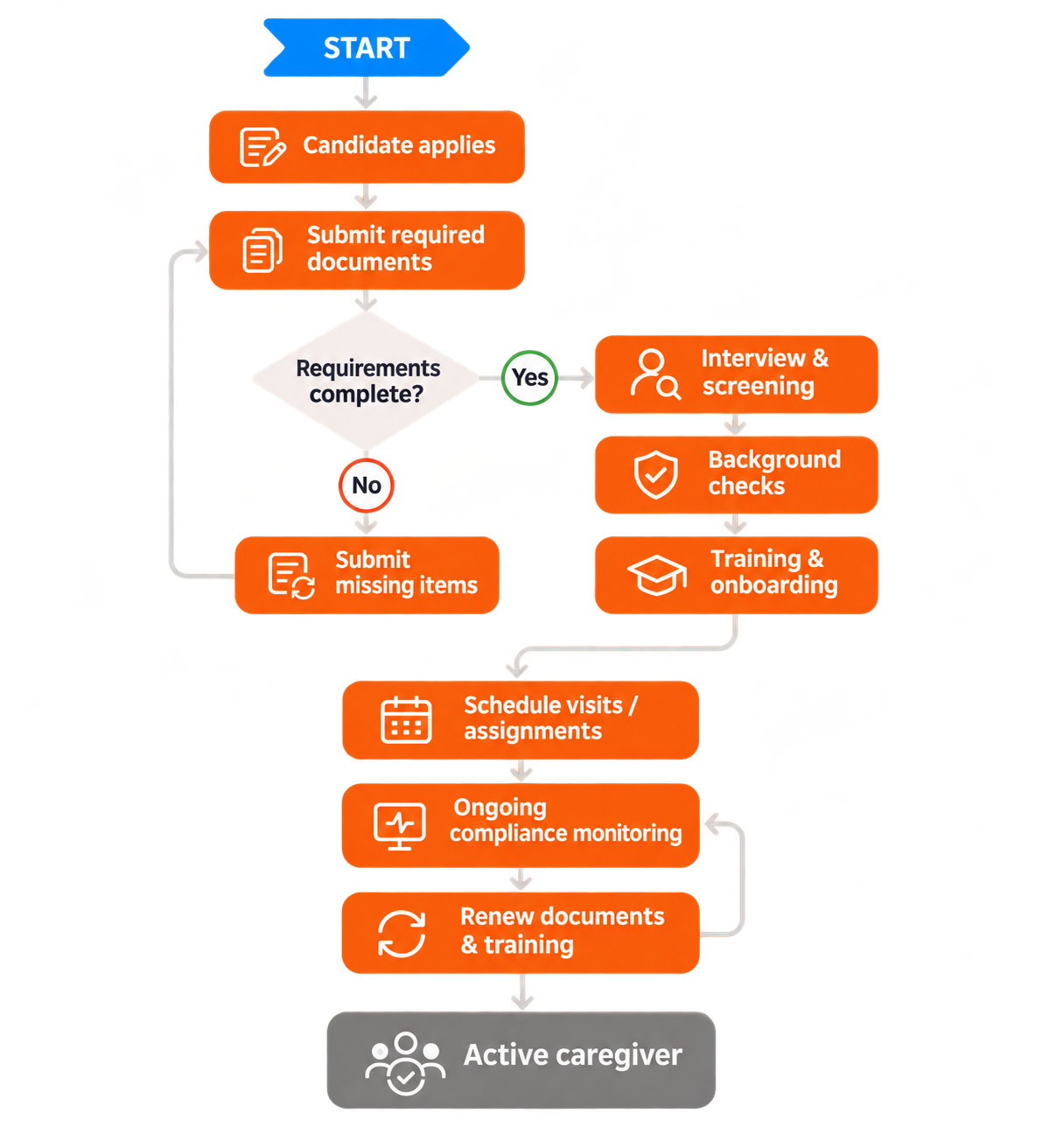
Abcor Home Health managed roughly 1,500 caregivers across four offices, with recruiting, training, and compliance documents tied to paper-heavy processes. I interviewed senior management and subject-matter experts, shadowed employees doing the work, and examined every critical document and handoff before deciding what to automate.
I used detailed waterfall planning to turn those findings into documented requirements, HRMS specifications, and milestones and to improve the hiring process itself. We delivered slightly ahead of the planned December 2018 deadline.The original $90,000 scope stayed within its guaranteed budget; separately requested additions brought the final total to $115,000.
Home care
Compliance
Workflows
Healthcare HRMS
1,500+ Caregivers
4 Offices
Workflow Shadowing
Waterfall Plan
“Neologic drove the entire process and asked all the questions.” — Max Lukashevich, COO, Abcor Home Health
The Discovery Behind a CRM That Tripled Appeal Capacity
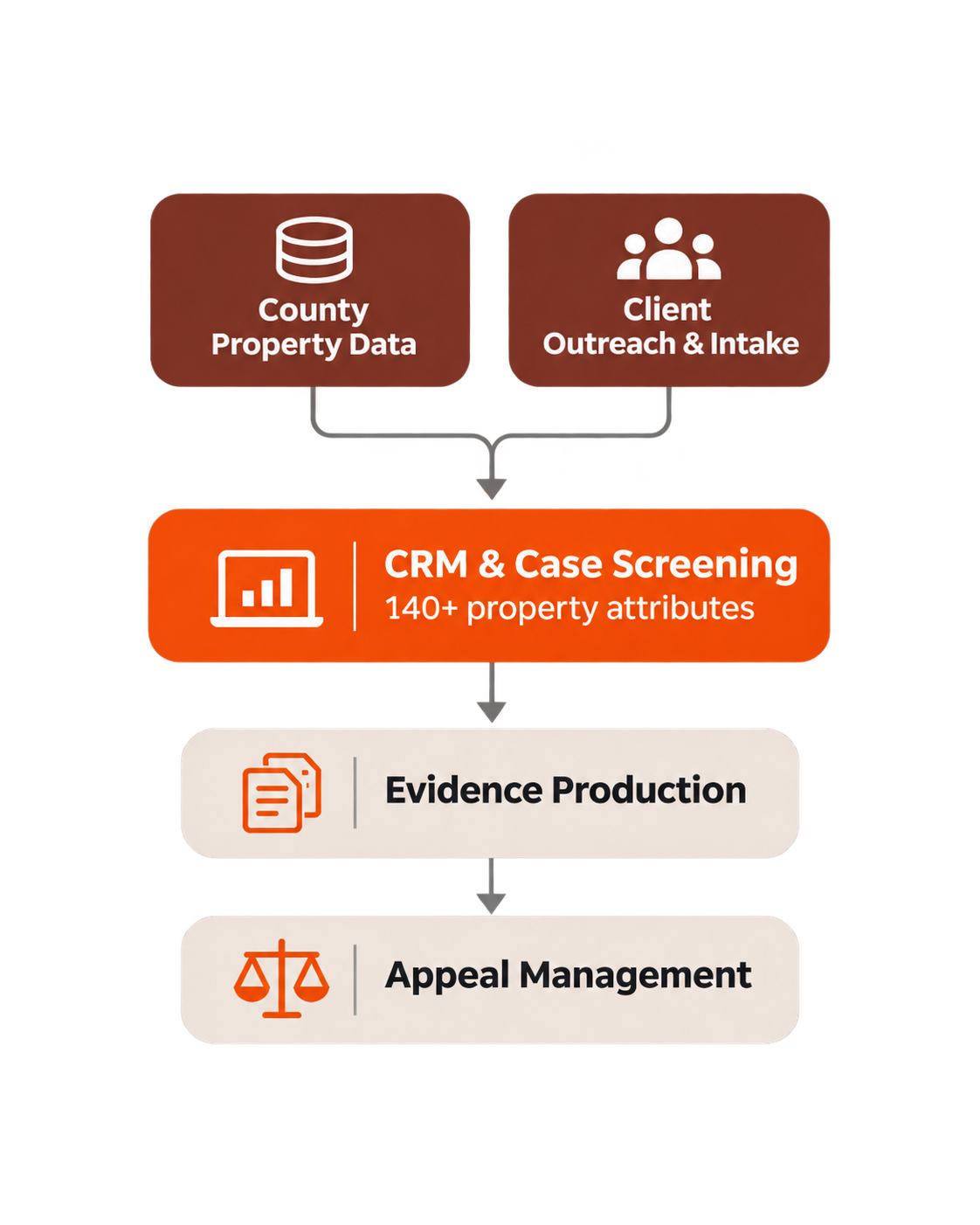
Property Tax Solutions grew from zero to 11,000 clients in three years, but its paper-heavy processes couldn't keep up. Previous programmers had struggled to understand the business well enough to build the right system. I audited the firm's workflows in person, tracing the entire tax-appeal process—from county assessment data and targeted mailers to client intake, evidence production, and case management.
That discovery showed why a generic CRM wouldn't work. We built a custom platform connecting marketing, client management, and proprietary case-screening logic using 140+ property attributes. The result: 3× the appeal volume with the same headcount and 30% of staff time saved.
Legal services
Workflow audit
140+ data attributes
Custom CRM
3× appeal volume
30% time saved
“Their willingness to understand our business was very impressive.” — Greg Hilton, Owner, Property Tax Solutions

CLIENT TESTIMONIAL
A Developer Who Understood the Business
“I hired a number of different programmers ... but they couldn't understand our business well enough ... And then I met Dmitriy and Neologic ... I gave him a small project to do ... It was far more than what we were even expecting, far more.”
Greg Hilton — Tax Attorney, Property Tax Solutions
A good prototyping engagement should establish what will be tested, what you'll receive, how revisions work, and what happens before development begins. These are the questions worth asking before committing your budget.
Should I hire a UX design studio or a software development company to prototype my app?
A UX design studio can be a good choice when you primarily need user research or interface design. If you intend to build custom software, Neologic connects prototyping to technical discovery, architecture, requirements, and development pricing, so the concept you approve can become a buildable plan.
Can you work with an existing Figma prototype or AI-generated MVP?
Yes. I assess the existing design or code, identify what can be reused, and determine what needs further validation. For AI-generated MVPs, that often means evaluating architecture, security, business logic, integrations, and production readiness before additional development.
Can we test the prototype with real users before development?
Yes, when user testing is appropriate for the project. Representative users can walk through realistic tasks and identify confusing interactions, missing steps, or workflow problems. We use that feedback to refine the prototype before approval.
What will I receive at the end of the prototyping stage?
For an interface-driven build, the outputs may include an approved clickable prototype, defined user journeys, requirements, technical specifications, architecture, and acceptance criteria. Deliverables depend on the project and are agreed before the engagement. These artifacts establish the basis for the approved development scope and build quotation.
How many prototype revisions are included?
Prototyping is iterative. We review the initial concept, identify changes, and refine it through agreed review cycles before final approval. The expected iterations and boundaries of the engagement are defined in advance rather than treating every new feature request as part of unlimited revisions.
How long does software prototyping take, and what does it cost?
Our standard development process allocates approximately 1–2 weeks to prototype and scope validation for suitable projects. The actual schedule and cost depend on the workflows, complexity, technical uncertainties, and testing required. I establish the appropriate scope and commercial terms before the work begins.
Can an AI prototype be turned into production-ready business software?
Yes, provided the underlying approach is viable. An AI demo may demonstrate the intended experience without proving reliability, data quality, security, or scalability. I assess those technical risks first, then define the architecture and engineering work required for production.
Who owns the prototype and design files if I don't proceed with development?
The engagement agreement should specify which prototype files, designs, documentation, and usage rights are delivered to you. For a subsequent software build, ownership of custom code and intellectual property is defined in the development agreement, including any third-party licensing limitations.
Will the development price be fixed after I approve the prototype?
For an approved fixed-scope project, yes, once the prototype or other validation artifact, technical requirements, architecture, exclusions, and acceptance criteria are agreed. I then guarantee the build price in writing. Any later changes outside that approved scope require separate approval.
FREQUENTLY ASKED QUESTIONS
What Should You Know Before Starting Software Discovery?
What makes software product discovery worth the investment?
Useful discovery produces decisions you can act on: prioritized requirements, a recommended technical approach, documented risks, and a realistic development plan—not just meeting notes. The investigation and deliverables should match the product's complexity, and the scope and terms should be clear from the start.
What's the difference between software discovery and prototyping?
Discovery determines what should be built or changed, why, and how. Prototyping lets you review or test a proposed solution. A prototype may help validate discovery findings, but not every project needs one.
Do I need discovery if my product already exists or I have a prototype?
Yes, when you're planning major changes or important technical questions remain. I assess existing requirements, architecture, data, and integrations, identify reusable components, and recommend a deeper code audit if needed.
Can you work with Figma designs or an AI-generated MVP?
Yes. I review what's already there and identify gaps in business logic, architecture, integrations, security, and production readiness before proposing the next development steps.
How long does the software development discovery phase take?
Neologic's standard process allocates approximately 1–3 weeks to initial discovery and assessment. More extensive product discovery can take 2–4 weeks or longer, depending on integrations, stakeholders, and technical uncertainty. I confirm the schedule for each project.
How much do software product discovery services cost?
As a ballpark, published agency examples range from $5,000–$15,000 for focused discovery to $20,000–$30,000+ for more extensive product and technical planning. These are third-party market reference points, not Neologic's rates or a quote. Actual scope and terms depend on the product and the questions that need resolving.
Can I take the discovery documents to another developer?
We can prepare documentation for another development team when a handoff is part of the agreed scope. The deliverables, ownership rights, and usage terms are specified in the agreement.
Does discovery lead to a guaranteed development price?
Yes, for an approved fixed-scope build after the necessary validation. Discovery establishes requirements and technical direction; we then agree on scope, acceptance criteria, and exclusions. I guarantee that approved price in writing. Additional requirements are priced and approved separately.
Thank you! Your message has been sent. I will be in touch shortly.
GET STARTED
Let's Work Out What Your Product Needs Next.
Tell me about the software you're planning to build, expand, or improve. I'll help determine what needs investigation and the next step toward a defined scope and budget.
By submitting, you agree to Neologic's Privacy Policy and Terms of Use.
This site is protected by reCAPTCHA. Google's Privacy Policy and Terms of Service apply.
